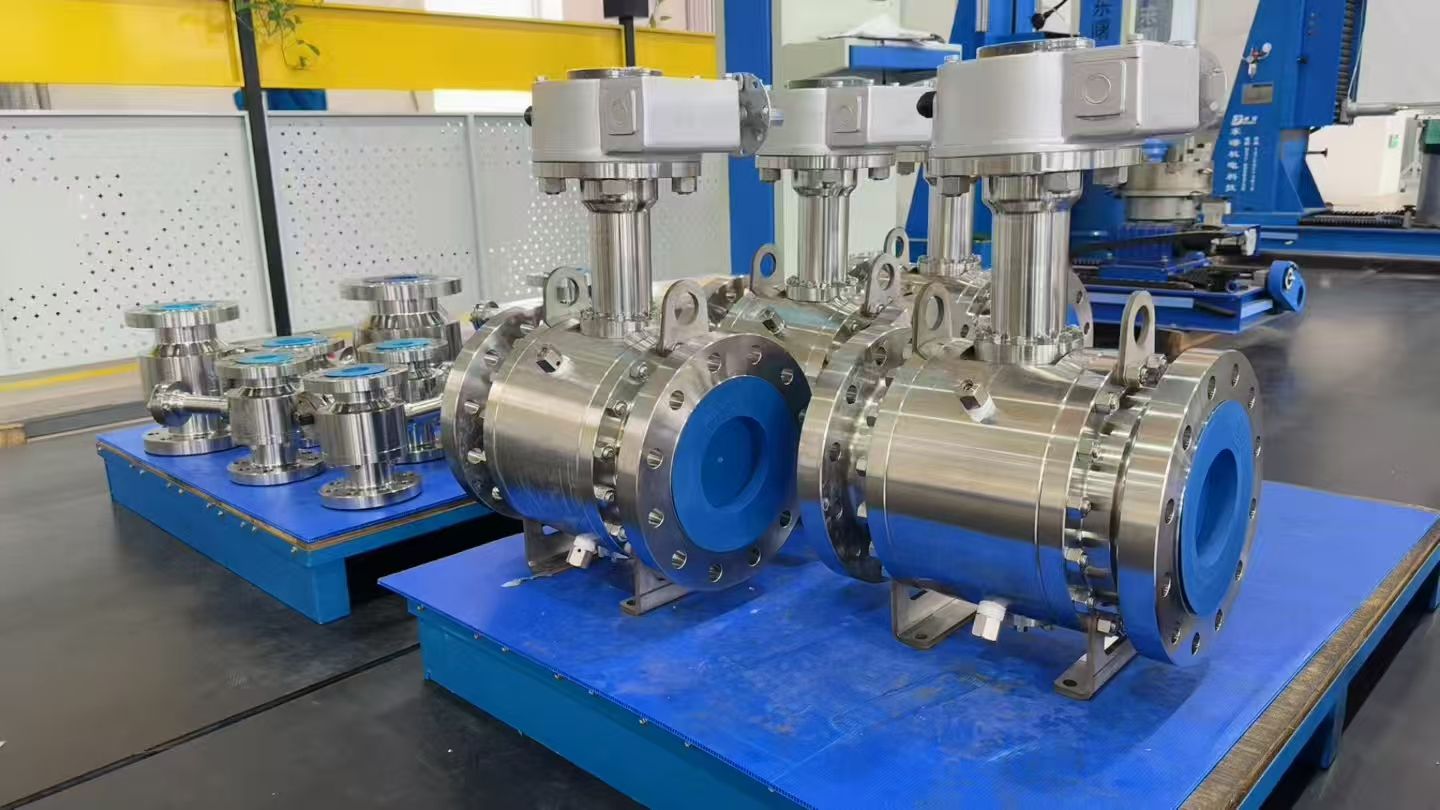
Dedicated cryogenic ball and gate valves for LNG and ultra-low-temperature service — designed, assembled and tested for temperatures down to −196 °C, with DNV type approval for marine and LNG duty.
LNG is stored and handled at −162 °C. At those temperatures, standard materials turn brittle, elastomer seals lose their elasticity, and thermal contraction changes the clearances the valve was built around.
A cryogenic valve must seal at operating temperature — not at ambient. That is why every KATA cryogenic valve is engineered from the ground up for cold duty: low-temperature materials, extended bonnets that keep the packing out of the frost zone, and seat designs that compensate for contraction and wear.
The result is a valve that holds a bubble-tight seal when it matters most — in the cold box, on the LNG carrier, at the regasification terminal.
| Service Class | Temperature Range | Typical Media |
|---|---|---|
| Low Temperature | −29 °C to −101 °C | Industrial cooling |
| Ultra-Low Temperature | below −101 °C | LNG −162 °C · O₂ −183 °C · N₂ −196 °C |
Ball valves in floating and trunnion configurations, plus cryogenic gate valves — each available with manual, worm-gear, electric or pneumatic actuation, and flanged, welded or mixed end connections.
| Size / Class | 1/2″ – 6″ · Class 150–600 |
| Size / Class | 1/2″ – 6″ · Class 900–2500 |
| Seat | Spring-loaded · PCTFE |
| Relief | Pressure-relief hole in ball |
| Size / Class | 6″ – 16″ · Class 150–600 |
| Size / Class | 6″ – 16″ · Class 900–2500 |
| Seat | Fixed trunnion · PCTFE / metal |
| Approval | DNV TAP000036B · Class 600 · NPS 6 |
| Service | LNG & low-temperature lines |
| Design | Extended bonnet, low-temp trim |
| Testing | −196 °C cryogenic per BS 6364 |
End connections: flanged · welded · one flanged + one welded end. Actuation: manual · worm gear · electric · pneumatic.
Ten design details, each one answering a specific failure mode of cryogenic service.
Extended bonnetKeeps the packing above the frost zone; a drip plate prevents ice from bridging the stem and freezing the valve shut.
Pressure reliefRelief hole in the ball prevents abnormal pressure build-up from media vaporization (floating type).
Spring-loaded seatsAutomatic compensation for seat wear and thermal contraction at low temperature.
Triple stem sealingOne LIP-SEAL lip seal plus two low-leakage packing sets, live-loaded to keep sealing force constant.
Anti-staticResistance below 10 Ω between body, stem and ball — no spark risk in explosive atmospheres.
Fire-safeDesign per API 607, so the valve holds its seal even after fire exposure.
Anti-blowout stemStem cannot eject under pressure; one-way assembly with a visible "T" mark showing relief-hole direction.
Double isolationDBB / DIB-1 / DIB-2 sealing options for processes that demand positive double isolation.
Dual body sealLIP-SEAL plus a metal spiral-wound gasket on the body/bonnet joint.
Low-temp materialsCF8/CF8M castings with Charpy impact verified at −196 °C.
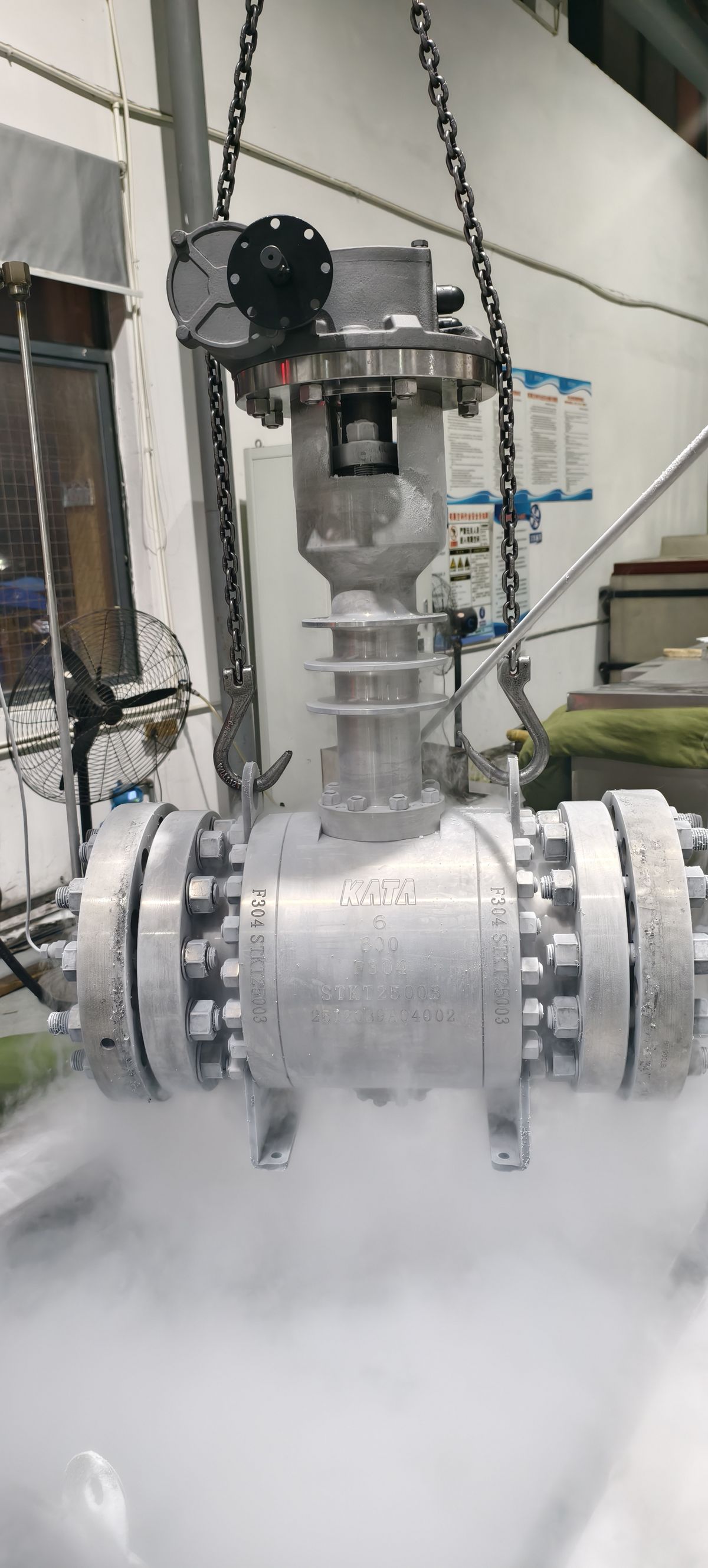
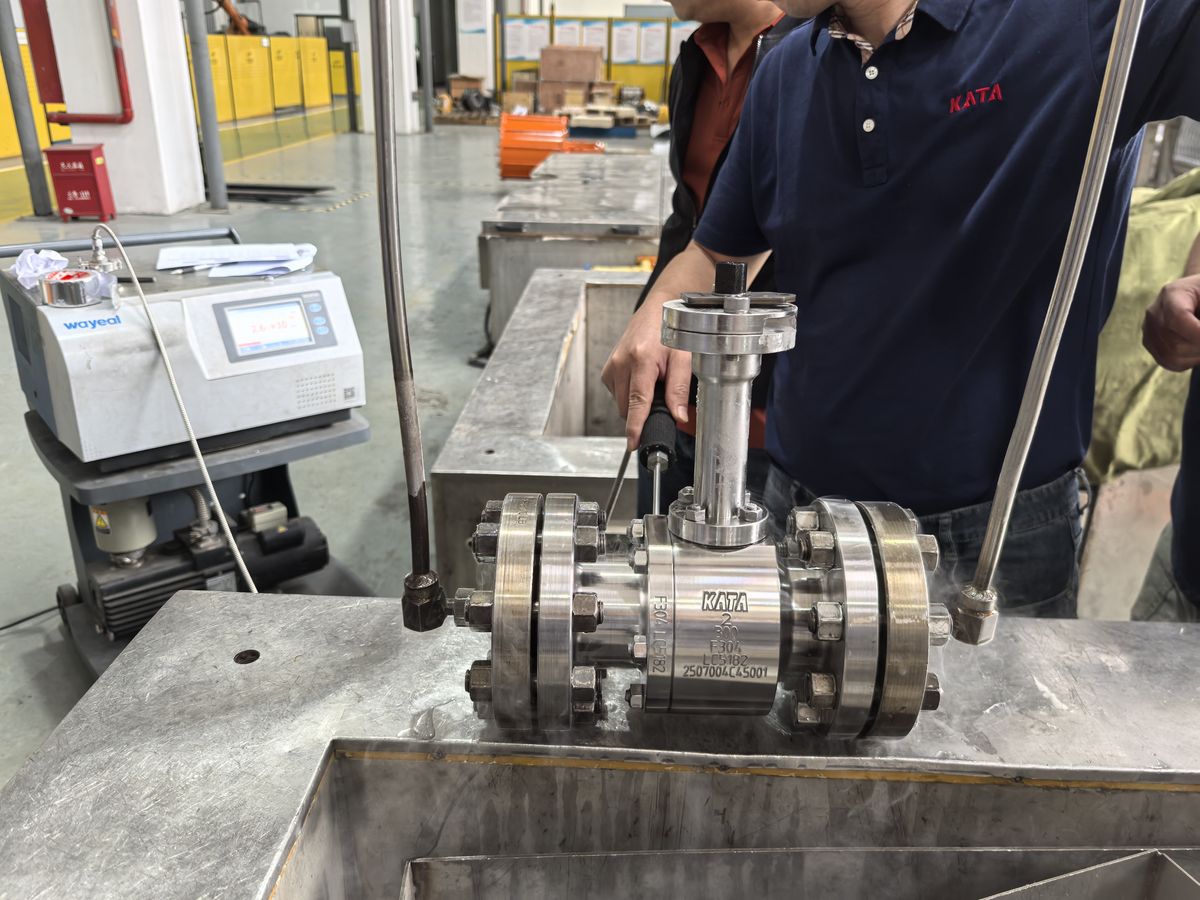
KATA operates a dedicated low-temperature laboratory: a liquid-nitrogen supply system, a temperature-controlled test chamber, and pressure and flow monitoring — so each valve is shell- and seat-tested at its actual operating temperature, with helium leak testing at −196 °C and thermal-imaging analysis validated by FEA.
Design and testing follow the international cryogenic standards your projects specify.
Cryogenic trunnion ball valve — Class 600, NPS 6, −196 °C to +120 °C — certified for LNG and marine applications. Valid until 26 April 2031.
The KATA cryogenic range is built for LNG, industrial gases and the emerging cold-energy economy.
Ask for the KATA cryogenic catalogue and the DNV certificate — or talk to us about sizing and selection.